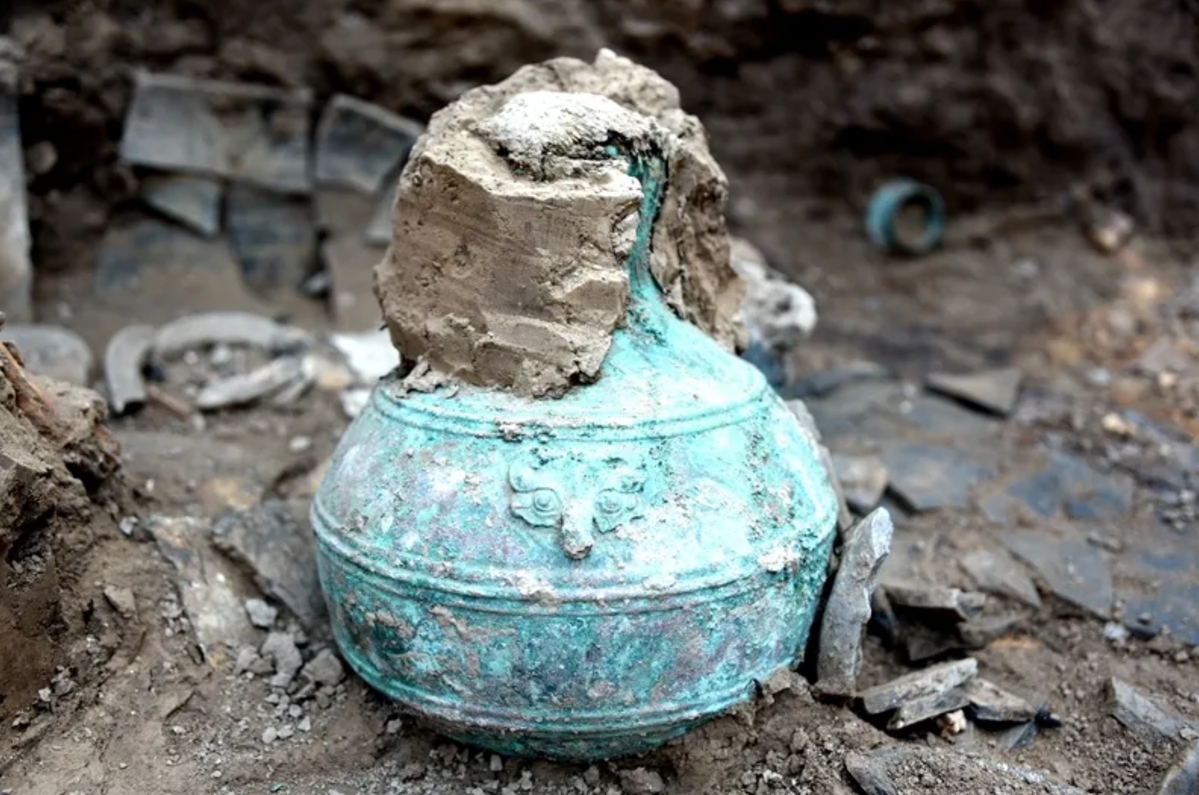
Archaeologists have identified residue of a 2,300-year-old grain-based alcoholic drink from the Warring States Period (475-221 BC) in Northwest China’s Ningxia Hui autonomous region, offering new insights into ancient Chinese brewing technology.
The discovery was made at the Shanjiabu cemetery of the Qin State of the period in the city of Guyuan, where researchers found the liquid preserved inside a bronze garlic-head-shaped pot — a distinctive vessel of Qin culture, according to the regional department of culture and tourism. Through a combination of archaeological research and advanced scientific analysis, researchers confirmed that the 3,740 ml of liquid extracted from the vessel was a grain-based alcoholic beverage produced during the Warring States Period.
The sample is believed to be China’s best-preserved liquid alcohol relic from the era publicly reported to date, filling a gap in archaeological research on ancient brewing in Ningxia.